The Intelligence Layer for Selective AI Execution
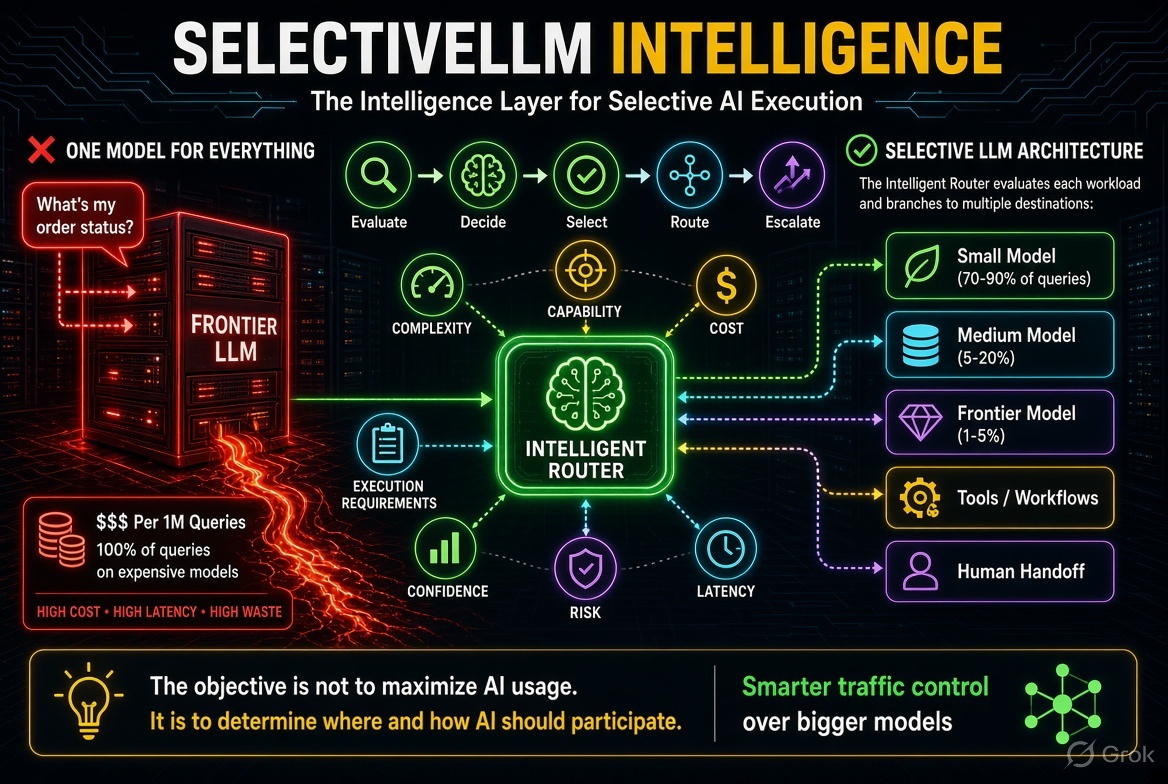
SelectiveLLM explores an intelligent approach to enterprise AI: evaluating each workload before determining how it should be handled based on complexity, capability, cost, latency, risk, confidence, and execution requirements.
The objective is not to maximize AI usage. It is to determine where and how AI should participate.
From Evaluation to Intelligent Routing
SelectiveLLM brings these considerations together to determine the appropriate execution path — model, tool, workflow, or human-based on the requirements of the workload.
Explore the Intelligence Layer
Enter a workload and see how a conceptual SelectiveLLM decision layer could evaluate the task and determine an appropriate AI execution path.
⚡ Interactive SelectiveLLM Evaluation
Try a sample workload or enter your own request. The simulation demonstrates how workload characteristics can influence an AI execution decision.
Concept SimulationHow the Concept Could Work
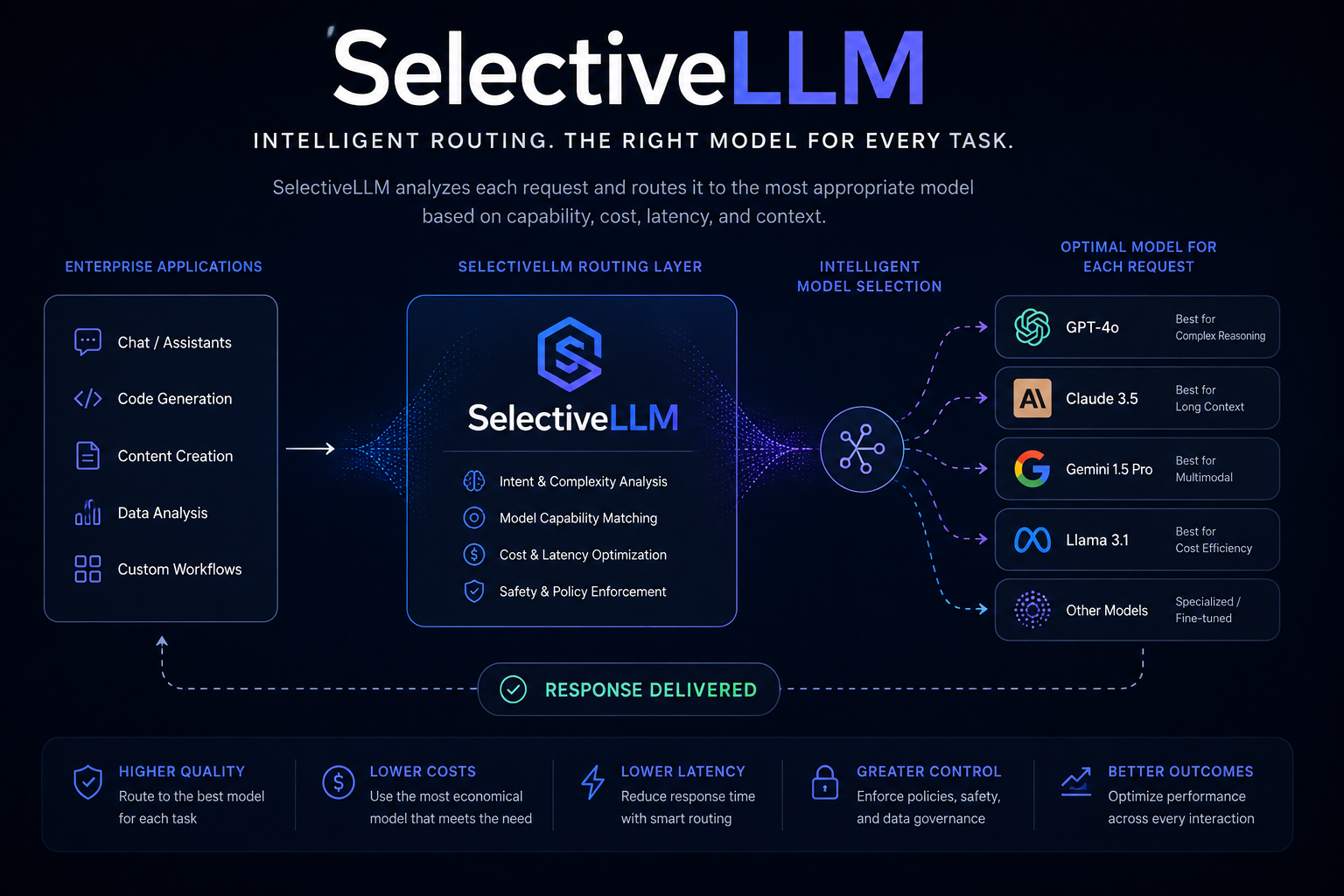
A conceptual architecture for translating workload requirements into an appropriate AI execution path.
Core Intelligence
SelectiveLLM can be developed around several complementary decision capabilities.
Workload Intelligence
Evaluate workload characteristics including task type, complexity, reasoning requirements, data sensitivity, expected output, and operational context before determining how AI should participate.
Model & Execution Selection
Determine the appropriate level of AI capability and potential execution pathway based on workload needs, cost, latency, reliability, and defined requirements.
Confidence & Escalation
Explore approaches for selectively restricting, escalating, reviewing, or requiring additional oversight when uncertainty, complexity, or potential impact increases.
AI Should Not Be One-Size-Fits-All
Different workloads require different levels of intelligence. Some may be suitable for lightweight, lower-cost execution. Others may require greater reasoning capability, additional controls, human review, or a different execution path altogether.
Governance as Part of the Decision Layer
Governance is one of the factors that can influence an AI execution decision. Data sensitivity, risk, human oversight, regulatory exposure, auditability, and decision authority can all affect whether and how AI should participate.
Explore Governance Framework →Potential Future Directions
The SelectiveLLM intelligence layer could evolve into specialized capabilities for AI route selection, model routing, execution orchestration, and adaptive workload handling.